Basic Tees
 Super Hero
 Printed T-Shirts
 Superheroes Full Sleeves
 Men’s Tank Tops
 Super Hoodies
 Super Sweatshirts
 Jogger Pants / Bottoms
 The Super Shorts
If you’ve ever scrolled through Etsy or Instagram and thought “I could design something better than this,” you’re not alone — and good news, you’re closer to turning that thought into income than you think. Learning how to start a t-shirt printing business from home is one of the most accessible ways to build a creative, profitable side hustle (or even a full-time brand) without renting a storefront or hiring a team. All you really need is a small corner of your house, the right equipment, and a plan that doesn’t skip the boring-but-crucial steps.
In this guide, we’ll walk through everything — from picking your niche to pricing your products — so you can launch with confidence instead of guesswork.
💡 Why Start a T-Shirt Printing Business from Home?
Before diving into the “how,” let’s talk about the “why.” A home-based t-shirt printing business appeals to beginners for a few solid reasons:
- Low overhead — no rent, no commercial lease, no utility bills beyond what you already pay.
- Flexible hours — print in the evening, fulfill orders on weekends, scale at your own pace.
- Creative control — you design, you brand, you decide the direction.
- Scalable model — start small with a heat press, grow into DTG printing or print-on-demand as orders increase.
It’s genuinely one of the few businesses where your garage, spare bedroom, or even a kitchen table can become your first “factory floor.”
📈 Is a T-Shirt Printing Business Profitable in 2026?
Short answer: yes — if you treat it like a business and not a hobby. The custom apparel market continues to grow steadily thanks to print-on-demand platforms, niche fashion communities, and social media-driven shopping. Profit margins typically range between 30% to 60% per shirt, depending on your printing method, order volume, and branding strength.
The businesses that struggle are usually the ones that skip research and jump straight into printing without a niche or marketing plan. The ones that succeed treat their t-shirt printing business ideas as a real brand — with a target audience, consistent designs, and a presence beyond just “selling shirts.”
🧭 Step 1: Research & Choose Your Niche
Every successful custom t-shirt business for beginners starts with a niche — not “t-shirts for everyone,” but “t-shirts for this specific group of people.”
Some profitable niche directions:
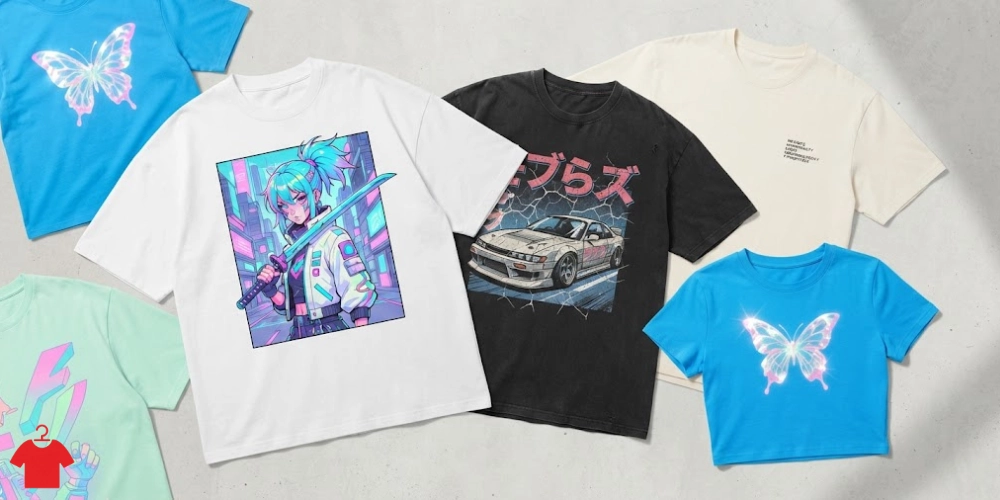
- Pop culture & fandom tees — superhero, movie, or TV-inspired designs
- Motivational or faith-based quotes
- Local pride / city-based designs
- Niche hobbies — gaming, fitness, pets, professions
- Minimalist or streetwear aesthetics
If you want design inspiration before committing to a niche, browsing an established store’s catalog helps a lot. Printees’ superhero-themed collection is a great example of how a focused niche (fandom apparel) can carry an entire brand identity.
💰 Step 2: Create a Business Plan & Startup Budget
You don’t need a 40-page business plan, but you do need clarity on your startup budget and cost before spending a single rupee.
Here’s a realistic breakdown for a home setup:
| Expense | Estimated Cost (Starter Setup) |
|---|---|
| Heat press machine | $150 – $400 |
| Blank t-shirts (bulk, 50 pcs) | $100 – $200 |
| Design software/subscription | $0 – $30/month |
| Packaging & shipping supplies | $50 – $100 |
| Online store setup (Shopify/Etsy) | $0 – $39/month |
| Marketing (initial ad budget) | $50 – $150 |
A lean beginner setup can realistically launch for under $500, especially if you start with print-on-demand (no inventory required) before investing in your own equipment.
📋 Step 3: Handle Business Registration & Legal Basics
This is the step most beginners want to skip — don’t. Even a small t-shirt business setup at home needs basic legal groundwork to avoid headaches later.
- Register your business name (sole proprietorship is usually enough to start)
- Check local licensing requirements — most home-based apparel businesses need a simple trade license, not a full commercial permit
- Open a separate business bank account — keeps your finances clean for tax season
- Understand copyright rules — avoid printing copyrighted characters/logos unless licensed; stick to original or properly licensed designs
Rules vary by country and city, so a quick call to your local business registration office saves you from costly surprises.
🖨️ Step 4: Choose Your Printing Method
This is where how to start a clothing printing business gets technical — but don’t worry, it’s simpler than it sounds. Here’s a side-by-side comparison of the most common garment printing techniques:
| Method | Best For | Startup Cost | Design Complexity |
|---|---|---|---|
| Screen Printing | Bulk orders, bold designs | Medium–High | Limited colors per screen |
| Heat Press / Vinyl Cutting | Small batches, custom text | Low | Simple shapes, text, basic graphics |
| DTG (Direct to Garment) | Detailed, full-color designs | High | Unlimited colors, photo-quality |
| Sublimation Printing | All-over prints, polyester fabrics | Medium | Vibrant, long-lasting, fabric-dependent |
Our recommendation for beginners: Start with a heat press machine and vinyl cutting machine combo — low cost, fast learning curve, and perfect for low-volume custom orders. As demand grows, you can graduate to DTG or sublimation printing for more complex designs.
🧰 Step 5: Get the Right Equipment & Supplies
Once you’ve chosen your method, it’s time to gather your screen printing equipment or heat press setup. Here’s your essential starter checklist:
- Heat press machine (or screen printing kit)
- Vinyl cutter (if doing text/logo-based designs)
- Heat transfer vinyl or screen printing inks
- A reliable t-shirt supplier/vendor for wholesale blank t-shirts
- Design software (Canva, Adobe Illustrator, or CorelDRAW)
- Packaging materials (poly bags, boxes, branded stickers)
When sourcing wholesale blank t-shirts, consistency matters more than price alone — a slightly pricier blank that fits well and holds color better will save you from returns and bad reviews. If you want to see what quality basics look like before placing a wholesale order, Printees’ basic tees collection is a solid reference point for fit, fabric, and finish standards.
🎨 Step 6: Design Your T-Shirts
Your designs are your brand’s voice — this is where niche t-shirt designs either hook customers or get scrolled past. A few practical tips:
- Use t-shirt design software like Canva (beginner-friendly) or Adobe Illustrator (more control)
- Keep file resolution high (300 DPI minimum) to avoid blurry prints
- Test designs on different shirt colors before mass-printing
- Study trending aesthetics in your niche — but add your own twist
Looking at how established brands style printed graphics can speed up your learning curve. Browsing Printees’ printed t-shirts collection is a useful way to study layout, placement, and color choices that actually sell.
🛒 Step 7: Set Up Your Online Store
Here’s how to sell custom t-shirts online without a storefront — because yes, you absolutely can skip the physical shop entirely.
Your main options:
- Shopify — full control, your own branded store, best for long-term growth
- Etsy — built-in traffic, great for niche/handmade positioning
- Print on demand platforms (Printful, Printify) — zero inventory risk, they print and ship for you
Most beginners start with print on demand to validate designs before investing in bulk printing equipment. Once you know which designs sell, you can transition to in-house printing for better margins.
If you want to see a fully built e-commerce for custom apparel example — product pages, categories, and checkout flow — Printees’ online shop is worth studying as a live reference.
💵 Step 8: Price Your Products for Profit
Knowing how to price custom-printed t-shirts for profit is where a lot of beginners either undercharge (and burn out) or overcharge (and get no sales).
A simple pricing formula:
Blank shirt cost + Printing cost + Packaging + Your time = Base cost Base cost × 2 to 2.5 = Retail price
This typically lands you a 30–50% profit margin, which is healthy for a home-based operation. Don’t forget to factor in platform fees (Etsy, Shopify payment processing) when setting final prices.
📣 Step 9: Market Your Brand & Find Customers
Even the best designs won’t sell themselves. Here’s how to find your first customers for a t-shirt business:
- Social media marketing for apparel — Instagram and TikTok are the strongest channels for visual products like t-shirts
- Influencer micro-collaborations — send free samples to small niche creators
- Local pop-ups or markets — great for first-sale momentum and direct feedback
- Email list from day one — even 50 subscribers can drive your first 20 sales
- Bundle offers — pairing a tee with a hoodie increases average order value
Speaking of bundling — expanding into related apparel like hoodies is a smart move once your t-shirt line gains traction. Printees’ super hoodies category shows how brands successfully extend a niche into multiple product types.
⚠️ Common Mistakes to Avoid
- Skipping market research — printing shirts nobody actually wants
- Underpricing out of fear — it kills margins fast
- Ignoring copyright rules — printing unlicensed characters/logos can get your store shut down
- No clear niche — trying to appeal to “everyone” usually appeals to no one
- Poor quality control — one bad print run can hurt your reputation long-term
🎯 Can You Start a T-Shirt Printing Business with No Investment?
Technically, yes — through print-on-demand models where you upload designs and the platform handles printing, packaging, and shipping. You only pay when a sale happens. It’s the lowest-risk entry point, though profit margins are thinner compared to printing in-house. It’s a smart way to test your niche before committing to equipment.
🏁 Conclusion
Starting a home-based t-shirt printing business isn’t about having a fancy setup or a huge budget — it’s about starting smart. Pick a niche you understand, choose a printing method that fits your budget, nail your pricing, and show up consistently on the platforms where your audience already hangs out. The brands that win in this space aren’t necessarily the most talented designers — they’re the most consistent and customer-focused ones.
You now have the complete roadmap for how to start a t-shirt printing business from home, from your first design file to your first paying customer. The next move is yours.
Ready to see what a successful t-shirt brand looks like up close? Explore Printees’ full shop for design inspiration, quality benchmarks, and niche ideas you can apply to your own brand starting today.
❓ Frequently Asked Questions
What equipment do I need to start a t-shirt printing business?
At minimum, you’ll need a heat press machine or screen printing kit, blank t-shirts, design software, and basic packaging supplies. A vinyl cutter is optional but helpful for text-based designs.
How much money is required to start a t-shirt business from home?
A lean starter setup typically costs between $300 and $500, covering a heat press, a small batch of blank shirts, and basic design software. Print-on-demand models can start with near-zero upfront investment.
Is a t-shirt printing business profitable in 2026?
Yes, with profit margins commonly ranging from 30% to 60% per shirt, provided you choose a clear niche, price correctly, and market consistently.
Which printing method is best for beginners — screen printing, DTG, or heat press?
Heat press combined with vinyl cutting is the most beginner-friendly option due to low cost and a short learning curve. DTG suits detailed, full-color designs but requires higher investment.
How to sell custom t-shirts online without a storefront?
Platforms like Shopify, Etsy, and print-on-demand services (Printful, Printify) let you sell online without any physical storefront or inventory.
What license is required for a home-based printing business?
Requirements vary by location, but most home-based apparel businesses need basic business registration and a simple trade license — check with your local business authority.
Where to buy blank t-shirts in bulk at low cost?
Wholesale garment suppliers and local textile vendors typically offer the best bulk pricing. Always order sample pieces first to check fabric quality and fit.
How to price custom-printed t-shirts for profit?
Use the formula: (blank cost + printing cost + packaging) × 2 to 2.5 for retail price, which typically yields a 30–50% profit margin.
How to find your first customers for a t-shirt business?
Start with social media marketing, niche micro-influencer collaborations, local markets, and an early email list to generate your first sales.
Can I start a t-shirt printing business with no investment?
Yes, through print-on-demand platforms where you only pay printing and shipping costs after a sale is made, eliminating upfront inventory risk.